JCE Environmental

Scope of services

Expert advice,
site by site

JCE Environmental provides professional hazardous materials guidance shaped to the conditions of each site — helping clients understand what they are dealing with, what their obligations are, and what to do about it.

01

Hazardous materials surveys

Identifying what is present, where it is, and what condition it is in — the foundation every other decision rests on.

Division 6 register surveys for occupied assets, and pre-demolition or pre-refurbishment surveys where the building fabric will be disturbed. Sampling is undertaken where material cannot be identified with confidence by inspection alone.

  • Compliant asbestos register with material and risk assessment
  • Photographic record and marked-up site plans
  • Bulk sampling and identification where required
  • Recommendations prioritised by risk, not by page order

Hazardous materials surveys

02

Asbestos assessment & clearance

Independent assessor services across Class A and Class B removal works, through to certification.

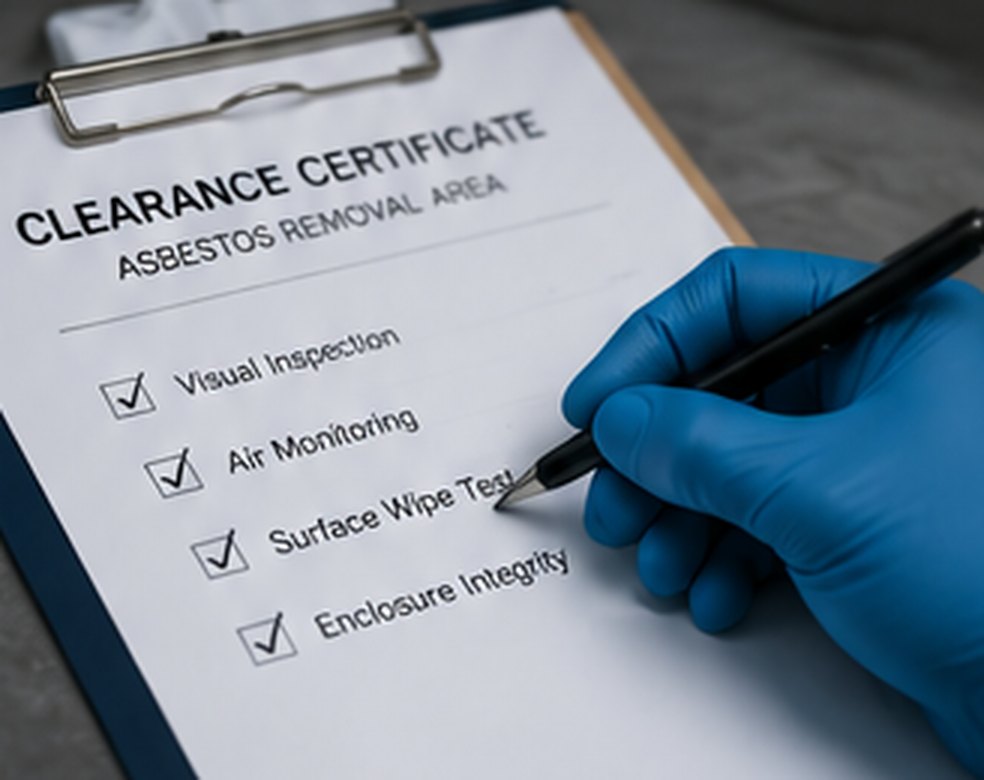
For friable removal, an independent licensed asbestos assessor is required. JCE provides that function — reviewing controls before work starts, inspecting during removal, and determining whether an area can be cleared.

  • Pre-removal review of control measures and enclosure design
  • Inspections during removal works
  • Visual clearance inspection and clearance air monitoring
  • Clearance certificate on satisfactory completion
Asbestos assessment & clearance

03

Air monitoring programs

Sampling designed around what the program actually needs to demonstrate.

Control, background, exposure and clearance monitoring undertaken to the membrane filter method. Sampling is by calibrated pump, with pump calibration records retained and results reported against the applicable criteria.

  • Background monitoring before works commence
  • Control monitoring during removal to verify containment
  • Clearance monitoring against the 0.01 fibres/mL criterion
  • Exposure monitoring where worker exposure must be characterised

04

Asbestos management plans

Turning a register into something a facilities team can actually operate.

A register records what is present. A management plan sets out who is responsible, what the controls are, how the material is monitored over time and what happens when it is disturbed — written for the people who will use it.

  • Roles, responsibilities and escalation paths
  • Control measures matched to material condition and site use
  • Inspection and review cycles
  • Incident and unexpected-find procedures

05

Removal supervision

Superintendent and oversight services on live removal programs.

Where a program involves multiple contractors, concurrent work fronts or sensitive occupied environments, JCE provides the technical oversight layer — keeping removal work aligned to the plan and to regulatory obligations.

  • Review of safe work method statements and removal control plans
  • Contractor and removalist management on site
  • Daily briefings and progressive compliance reporting
  • Coordination across concurrent work fronts
Removal supervision

06

Regulatory liaison

Engaging with regulators directly, on complex or contested matters.

Notifications, unexpected finds, complaints and incidents are easier to resolve when someone who understands both the regulation and the site is doing the talking.

  • WorkSafe WA notifications and enquiries
  • DWER, Department of Health and local government EHO liaison
  • Incident response and regulatory correspondence
  • Support during audits and inspections
Regulatory liaison

No two sites present the same problem

An occupied hospital, a heritage-listed facade, a remote FIFO camp and a fire-damaged residential block each carry different constraints. The right course of action on one would be the wrong call on another, and templated advice tends to be either over-engineered or unsafe.

JCE starts with what is actually in front of us — the condition of the material, how the site is used, who is exposed, and what the program can realistically accommodate — and works the problem from there.

Guidance is grounded in the national framework: the WHS Regulations, the relevant Codes of Practice, NOHSC:3003 and AS 4964, interpreted through 15+ years of laboratory, field and principal consultant practice.

The aim is advice a client can act on. What the risk is, what the realistic options are, what each one means for the program, and which one we would recommend — explained in terms that work for a site crew and a board alike.

Field delivery is resourced to suit the scale of the job, using qualified subcontractors and field staff engaged under written agreement. Technical direction, review of findings and assessor functions are retained by the licence holder.

Send us the scope

Tell us the asset, the works proposed and the timeframe. We will come back with a proposed approach and scope, usually within two business days.

Get in touch